


Telespace Networks

Industry

Energy and Utilities

POF and PCF control links, Harting LC housings and outdoor fibre assemblies for wind turbines, power electronics, substations and solar plants.

What fails here

The conditions your links have to survive

  1. Electrical noise everywhere

    Converters, IGBT stacks and switchgear radiate interference that corrupts copper signalling. Fibre carries control signals through it untouched.

  2. Isolation between potentials

    Gate drives and sensors sit at very different voltages. Fibre gives complete galvanic isolation with nothing to flash over.

  3. Vibration in the nacelle

    Turbine nacelles and towers vibrate constantly. Connectors need positive locking and cables need strain relief at every entry.

  4. Long life, little access

    Turbines and substations run for decades with planned maintenance windows. Links must stay stable between visits.

Products for energy

What we build for energy and utilities

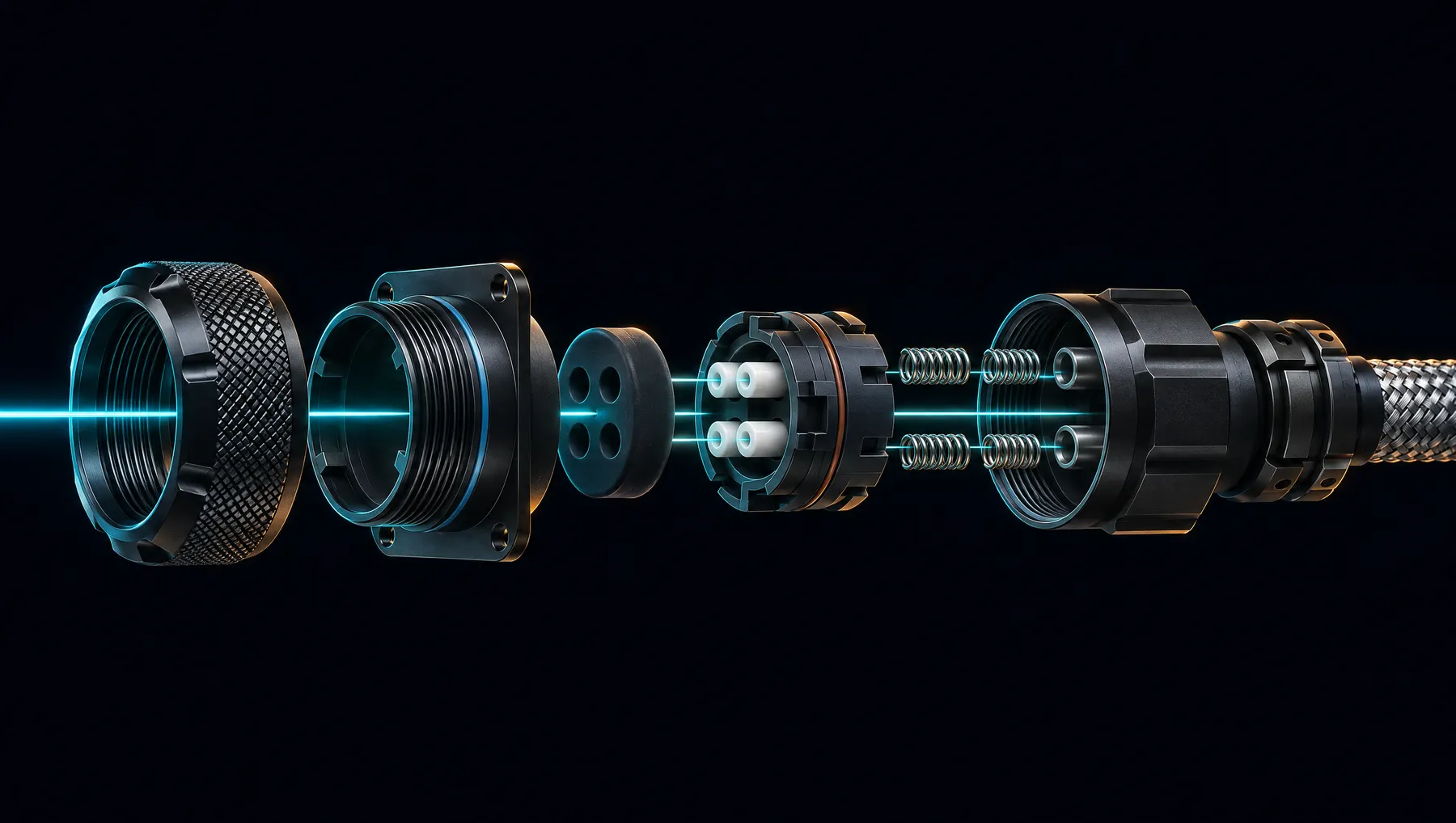
Exploded render of a fibre optic connector showing ferrule, body, spring and housing parts Fibre

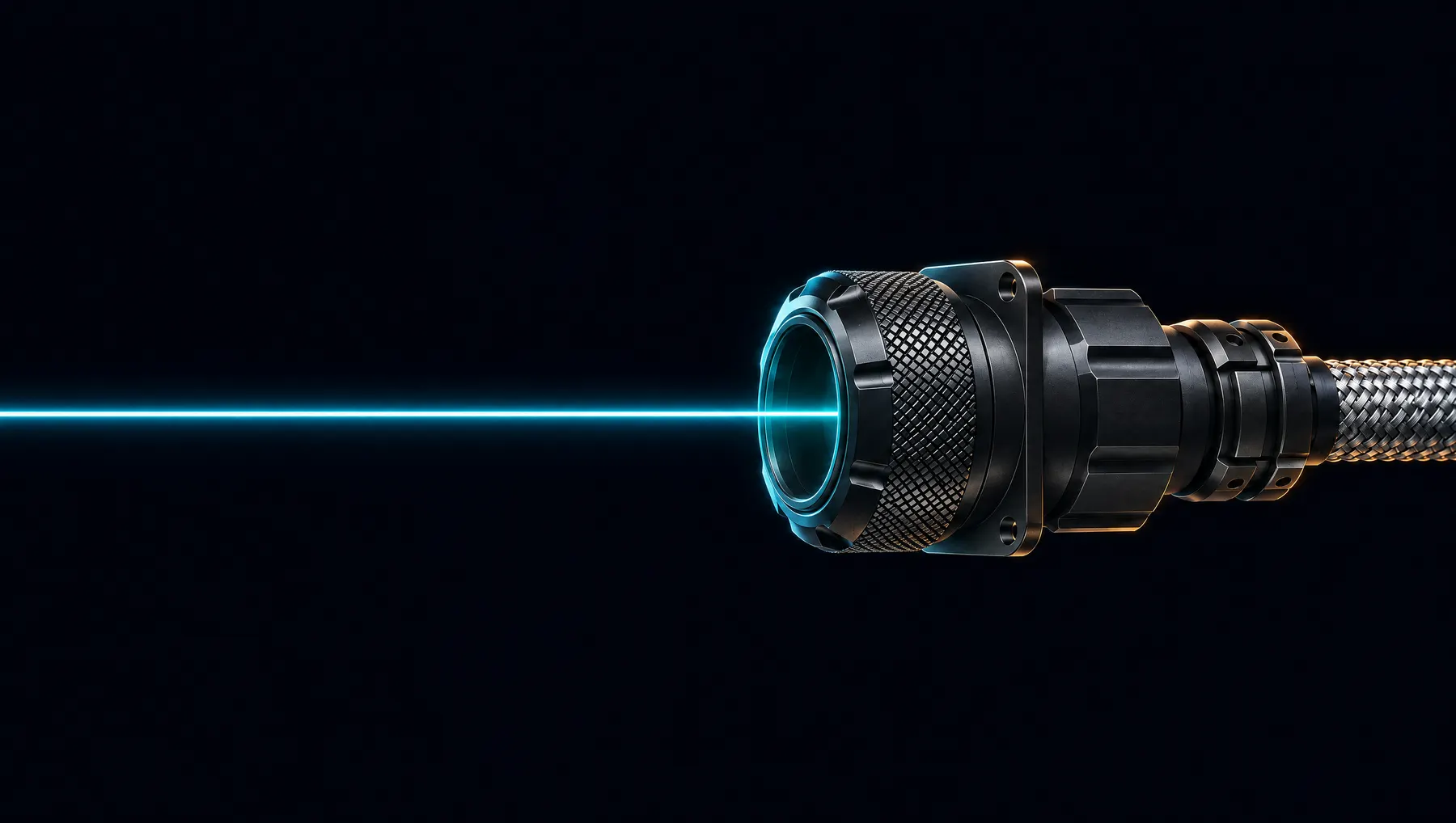
Harting-Compatible LC Industrial Fibre Connector

LC fibre inside a sealed industrial housing for turbines, panels and plant.

  • HousingHan-type rectangular
  • Fibre connectorLC
  • FibreSM or MM
View specs
Exploded view of a fibre optic connector showing ferrule, body and boot PCF

PCF 200/230 µm HFBR Connector Assemblies

Longer, tougher control links than plastic fibre, on the same connector.

  • FibrePCF 200/230 µm
  • ConnectorHFBR-style
  • LayoutSimplex or duplex
View specs
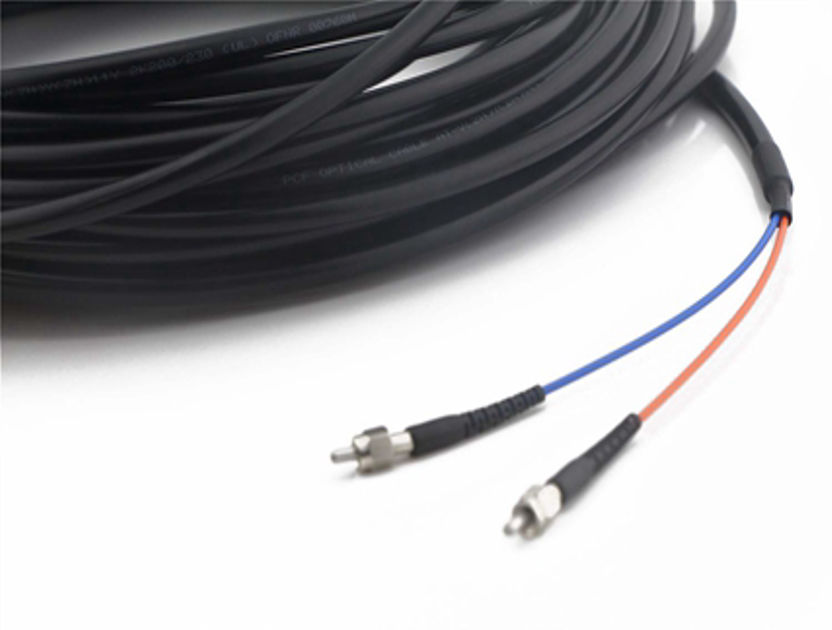
Coil of PCF fibre cable ending in SMA 905 threaded connectors PCF

PCF 200/230 µm SMA Connector Assemblies

Screw-locking PCF links that stay put under vibration.

  • FibrePCF 200/230 µm
  • ConnectorSMA 905, threaded
  • LayoutDuplex or simplex
View specs
Assembled fibre optic connector, representing an HFBR-style plastic optical fibre plug POF

POF HFBR Connector Assemblies

Short, isolated optical links for drives, PLCs and grid equipment.

  • Fibre1 mm POF
  • ConnectorHFBR-style, simplex or duplex
  • LatchLatching or non-latching
View specs
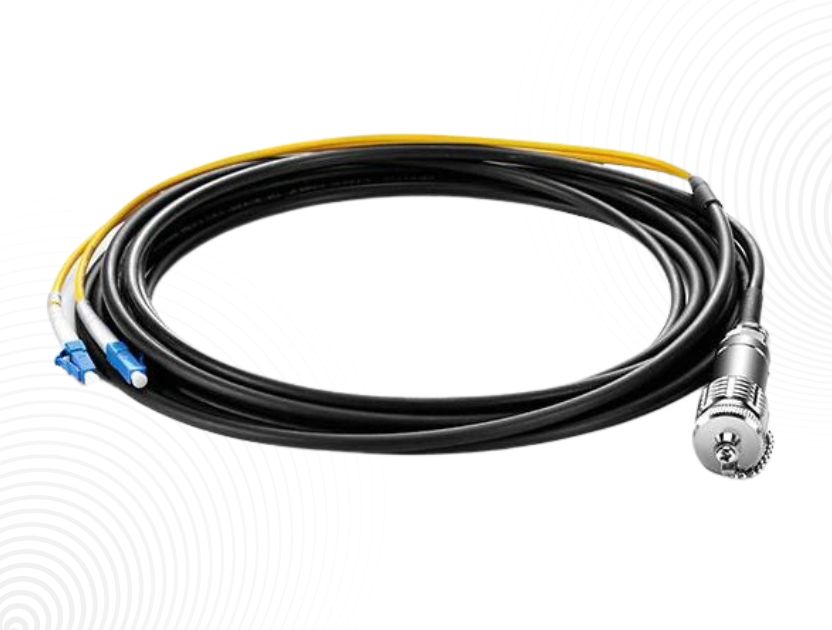
Black outdoor fibre cable assembly with an LC duplex breakout on one end and a round metal rugged plug on the other Fibre

Outdoor Fibre Optic Cable Assemblies

Sealed fibre jumpers for towers, poles, enclosures and field sites.

  • SealingIP67 (mated)
  • Temperature-40 to +85 °C
  • FibreSM or MM
View specs
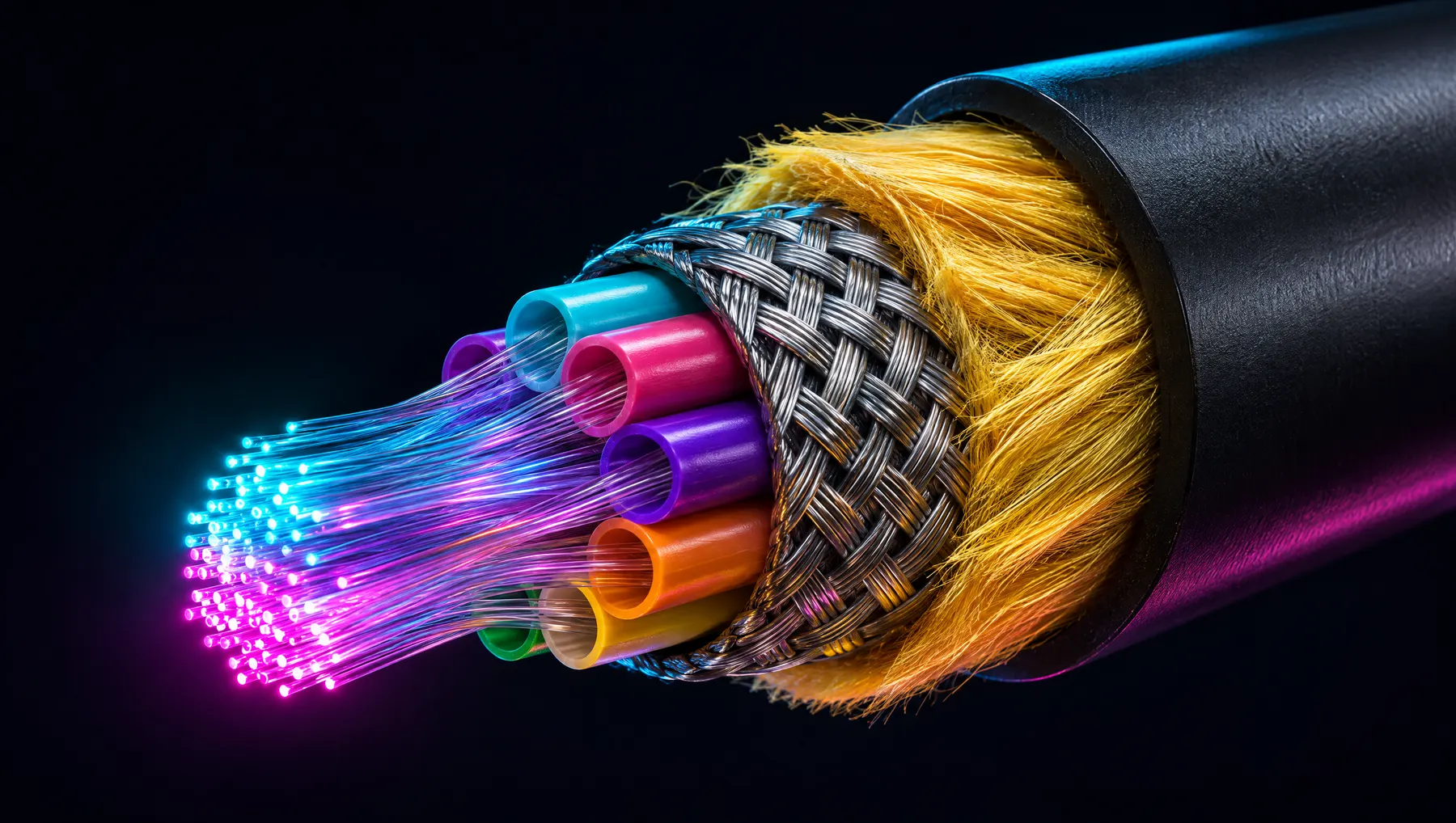
Cutaway illustration of an armoured fibre cable showing fibre, aramid strength layer, steel armour and outer jacket Fibre

Duplex Armoured Tactical Fibre Cable

A transmit and receive pair with steel armour, for links that get stepped on.

  • Fibres2 (duplex)
  • FibreSM or MM
  • ArmourSteel spiral
View specs
Single strand of optical fibre carrying light, illustrating a plastic optical fibre control link POF

POF TOCP-Style Connector Assemblies

Noise-immune control links for drives, inverters and automation panels.

  • Fibre1 mm POF or 200/230 µm PCF
  • PlugsF05 or F07 type
  • LayoutSimplex or duplex
View specs
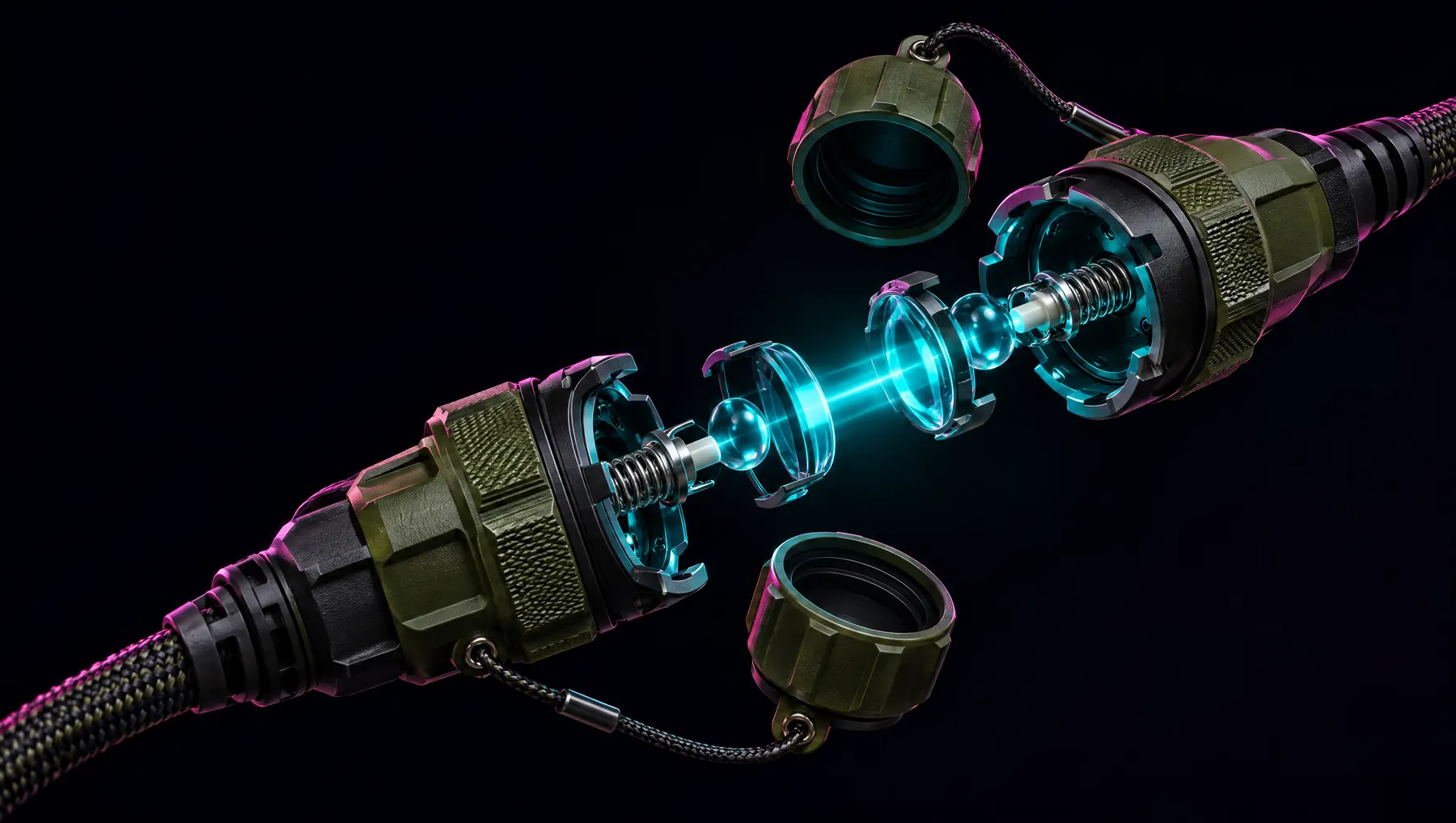
Rendered cutaway of an expanded beam connector showing lenses widening the light between two fibres Fibre

Expanded Beam Fibre Optic Connectors

Lens-coupled connectors that keep working in dirt, mud and rain.

  • CouplingLens, non-contact
  • MatingHermaphroditic
  • ChannelsSingle or multi
View specs
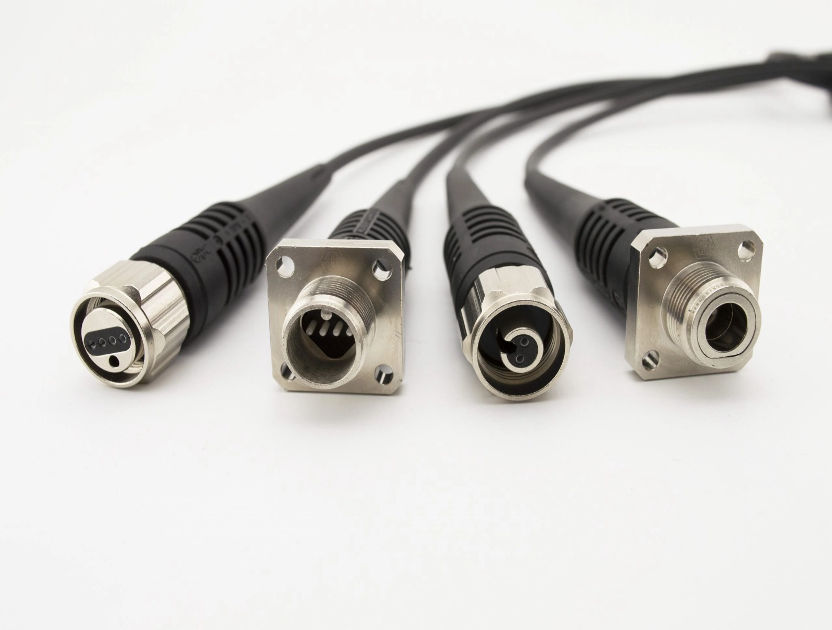
Four ODC-style outdoor fibre connectors, two cable plugs and two square-flanged panel receptacles Fibre

ODC-Style Outdoor Fibre Connector, 2 and 4 Channel

Sealed 2 and 4 channel field connectors for towers, rail and industrial sites.

  • Channels2 or 4
  • IngressIP67
  • BodyUV and corrosion resistant
View specs
Black tactical fibre cable on a metal spool with olive rugged connectors and protective caps Fibre

Fibre Optic Harnesses and Optical Systems

Multi-branch fibre harnesses built to your drawing and tested leg by leg.

  • BuildTo drawing
  • BranchesMulti-leg breakouts
  • FibreSM or MM
View specs
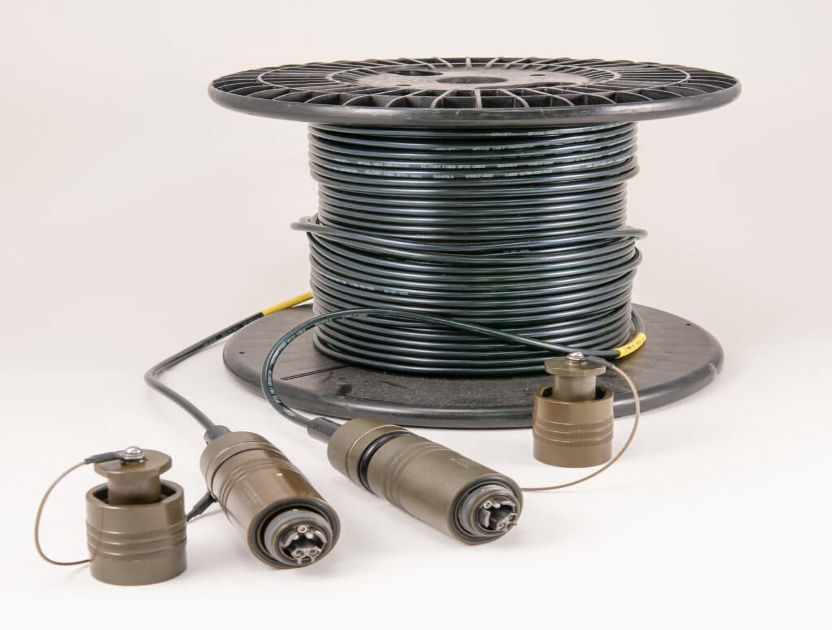
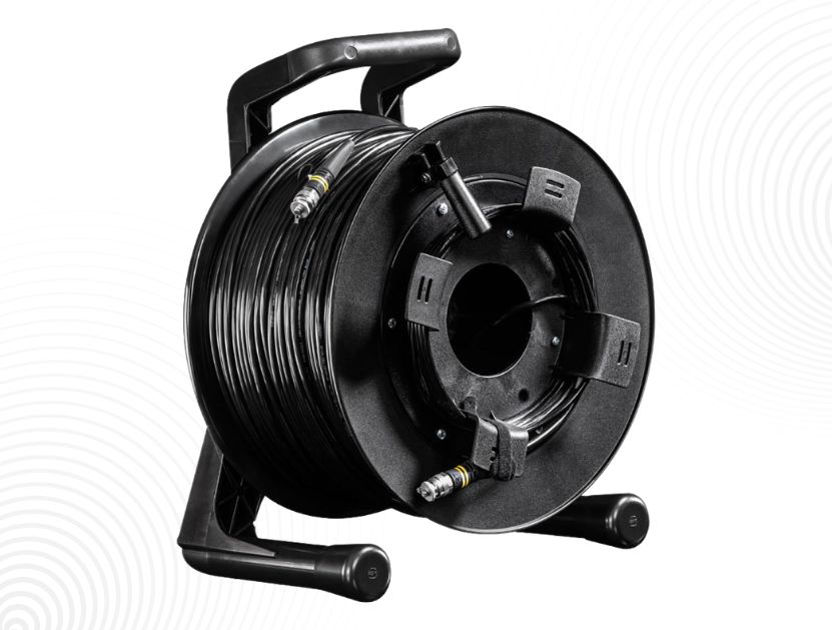
Black tactical fibre optic cable drum with two rugged field connectors on the cable ends Fibre

Tactical Fibre Optic Cable Reels

Fibre that pays out in minutes and winds back for the next job.

  • Length100 m standard
  • FibreSingle-mode
  • SealingIP67 cap, plug, receptacle
View specs

Engineering notes for energy and utilities

The environment

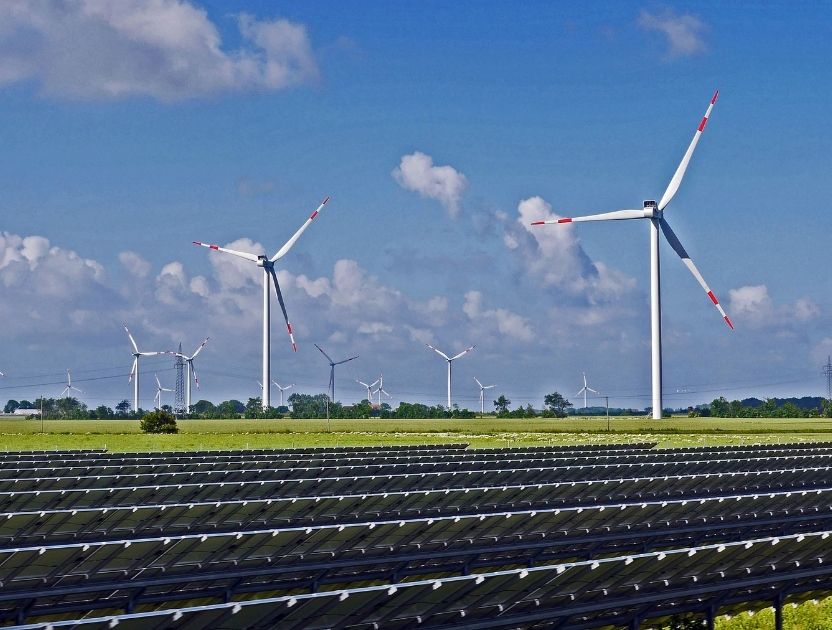
Energy and utility sites are electrically violent places. Wind turbine converters, solar inverters, variable-speed drives, HVDC valves and substation switchgear switch large currents at high speed, filling the space around them with electromagnetic noise. Different parts of the same cabinet can sit thousands of volts apart. Turbines add vibration, temperature swings from the base of the tower to the nacelle, and long intervals between maintenance visits.

That is why fibre is everywhere in power electronics. Light does not care about electrical noise, and a fibre link gives complete isolation between the controller and whatever it drives.

What fails

Connector retention is a common issue: small plastic connectors backing out of their ports under vibration. Fibre damage follows, especially POF bent too tightly or crushed inside crowded cabinets. Port mismatch causes delays when a replacement link arrives with an HFBR-style plug for a port that needs SMA or V-pin. Outdoor exposure degrades jackets on runs between turbines, inverter stations and control buildings if the cable was not chosen for UV and moisture.

What to specify

  • Short control links inside equipment: POF (980/1000 µm) with HFBR-style or TOCP-style connectors, simplex or duplex, cut to the exact length the cabinet layout needs.
  • Longer control links: PCF (200/230 µm) with SMA 905, ST, V-pin or HFBR-style connectors. PCF reaches hundreds of metres where POF stops at tens.
  • Data and SCADA links: glass fibre with LC connectors, in rugged industrial housings such as Harting-style LC where dust, moisture and vibration are present.
  • Site runs: armoured, UV-stable outdoor assemblies in single-mode OS2 between turbines, inverter stations and control rooms.
  • Details that matter: the exact connector on each equipment port (send a photo or the transceiver part number), jacket colour coding if your drawings use it, and labels at both ends.

Standards that matter

POF and PCF links are defined largely by the equipment makers’ transceivers, so matching the port is more important than any single cable standard. Our standards reference compares POF, PCF and glass multimode on core size, attenuation and typical reach. For glass fibre, connector mating follows IEC 61754, and IP67 and IP68 under IEC 60529 describe sealing for outdoor housings. Utilities often add their own specifications: list them on the request for quote.

How Telespace helps

We cut, terminate and test POF, PCF and glass fibre links in our Mumbai workshop, including replacement links for existing drives and converters. Send a photo of the old link or the equipment port, the length and the quantity, and we will confirm the connector before we quote. For unusual connector combinations or hybrid builds, see custom engineering.

FAQ

Energy and Utilities: questions buyers ask

Why do wind turbines and inverters use plastic or PCF fibre?

Power converters create intense electrical noise and have parts at very different voltages. POF and PCF links carry gate-drive and feedback signals with complete electrical isolation and no susceptibility to interference, and their large cores make them easy to terminate and tolerant of misalignment.

How do I choose between POF and PCF?

Match the fibre to the equipment port and the distance. POF suits links up to about 50 m with HFBR-style or TOCP-style ports. PCF (200/230 µm) has much lower loss and reaches a few hundred metres, with SMA, ST, V-pin or HFBR-style connectors.

What connector is used for fibre in turbine towers and substations?

For glass fibre, rugged industrial housings such as Harting-style LC connectors protect standard LC ferrules against dust, moisture and vibration. For long outdoor runs, armoured single-mode assemblies with LC or SC ends are typical.

Request a quote

Tell us where the signal has to go in energy.

Send a drawing, a part number or a rough description. An engineer replies within one business day with options and a quote.

Built in Mumbai and shipped to the UK and EU by express air freight, with DAP or DDP terms on request.