
Telespace Networks

Industry

Defence and Aerospace

Rugged fibre assemblies, MIL-style circular and expanded-beam connectors, and tactical cable reels for vehicles, shelters, ships, airframes and field networks.

What fails here

The conditions your links have to survive

  1. Dirt at the connector

    Sand, mud and dust on a physical-contact end-face can drop a link in one mate. Expanded-beam lenses or disciplined capping and cleaning are the cure.

  2. Crush, drag and vehicle traffic

    Field cables are driven over, dragged across rock and wound on and off drums hundreds of times. Jacket, armour and strain relief decide their life.

  3. Vibration and shock

    Airframes and tracked vehicles shake connectors loose and fatigue fibres at the boot. Threaded or bayonet coupling and proper boots keep links stable.

  4. Temperature and fluids

    Assemblies see desert heat, high-altitude cold, fuel, hydraulic fluid and salt spray. The cable jacket and epoxy usually set the real limit.

Products for defence

What we build for defence and aerospace

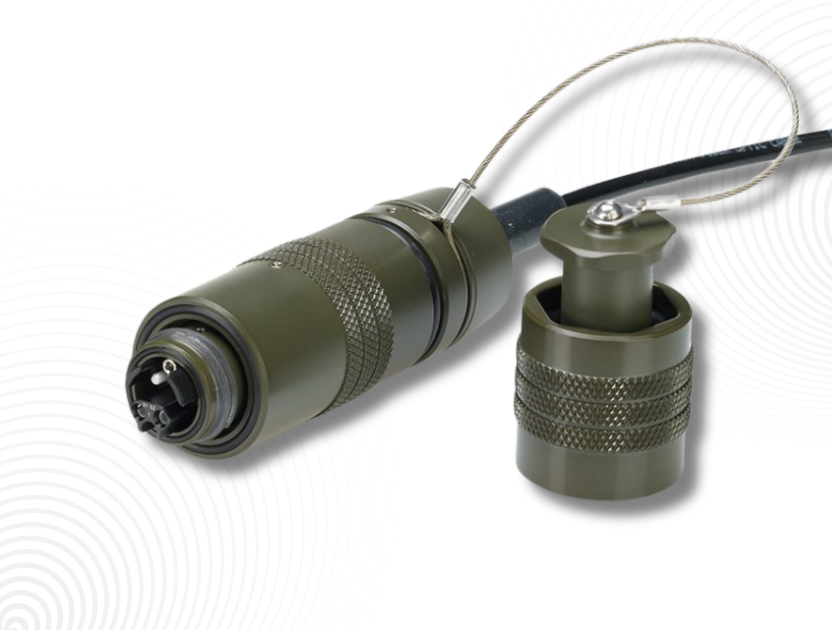
Olive-drab knurled MIL circular fibre optic connector with a tethered dust cap Fibre

MIL-Aero Fibre Optic Cable Assemblies

Rugged fibre assemblies for airframes, vehicles, ships and field systems.

  • FibreSM or MM
  • Connectors38999, TFOCA-style, LC, SC, ST, FC
  • JacketPU, LSZH or fluoropolymer
View specs
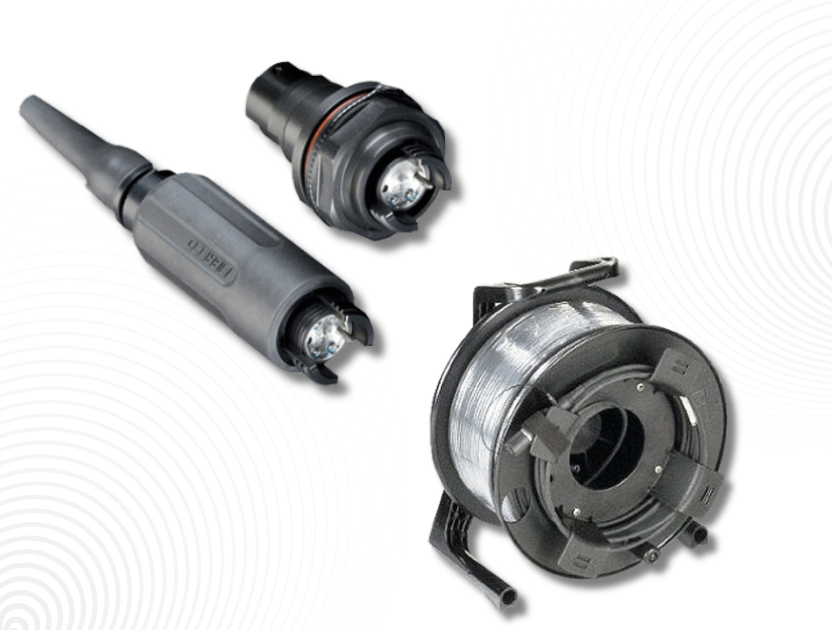
Grey expanded-beam tactical fibre plug and receptacle beside a metal reel of black field cable Fibre

Tactical Expanded-Beam Fibre Cable Assemblies

Field cable that mates end to end, in mud, rain and dust.

  • ConnectorExpanded beam, hermaphroditic
  • ContactNon-contact lens interface
  • JacketPolyurethane
View specs
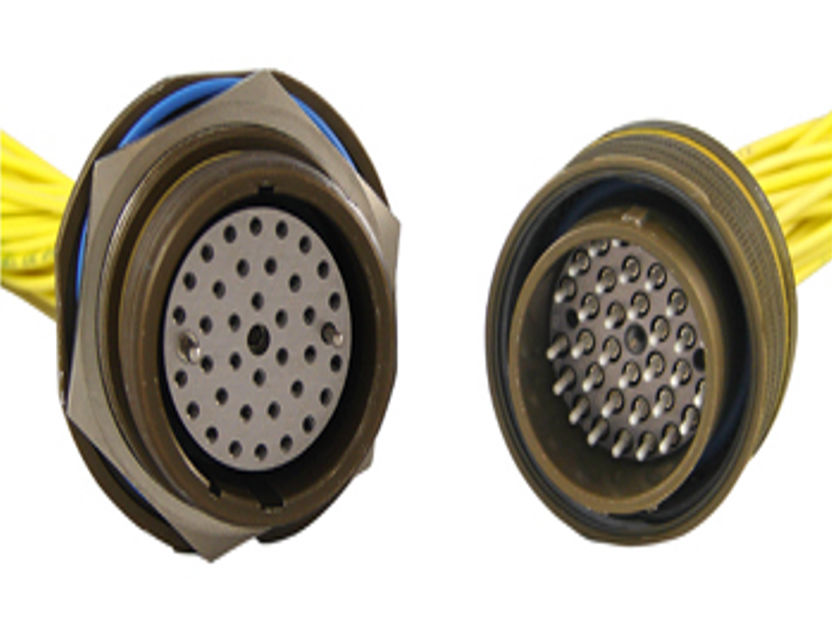
Two MIL-DTL-38999 style circular fibre optic receptacles with multiple termini cavities and yellow fibres Fibre

MIL Circular Fibre Optic Connector

Multi-channel circular fibre connectors for vehicles, ships and airframes.

  • StyleMIL-DTL-38999 type
  • TerminiGenderless
  • Ferrule1.25 mm ceramic
View specs
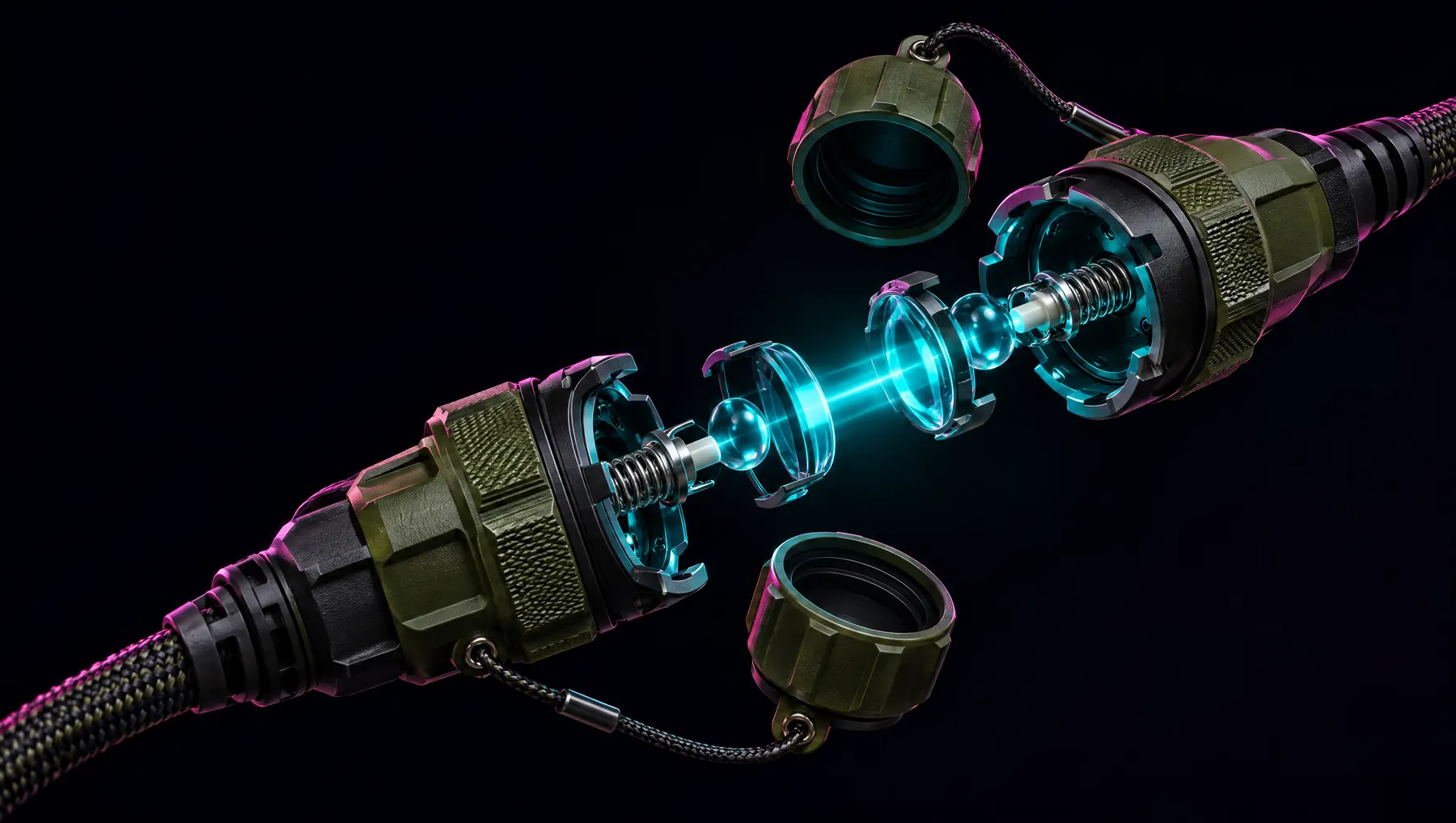
Rendered cutaway of an expanded beam connector showing lenses widening the light between two fibres Fibre

Expanded Beam Fibre Optic Connectors

Lens-coupled connectors that keep working in dirt, mud and rain.

  • CouplingLens, non-contact
  • MatingHermaphroditic
  • ChannelsSingle or multi
View specs
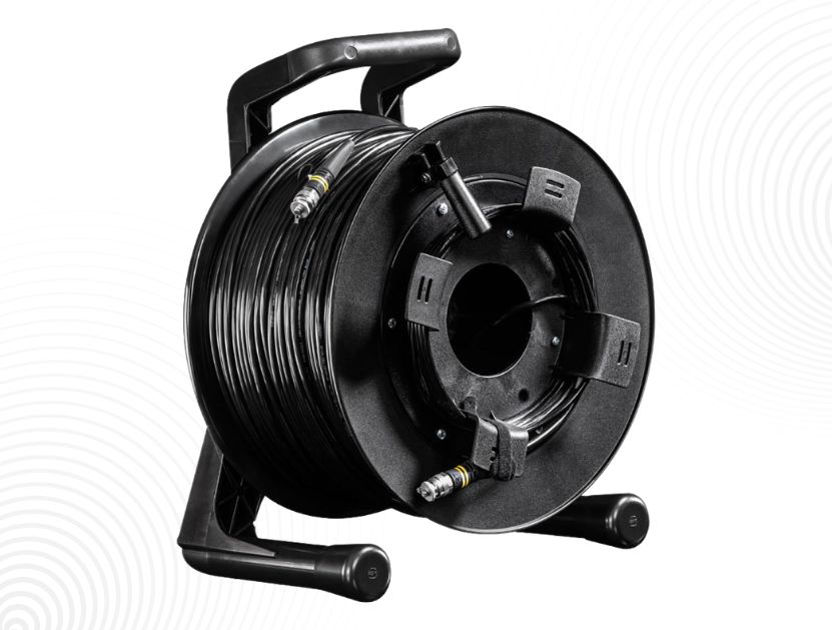
Black tactical fibre optic cable drum with two rugged field connectors on the cable ends Fibre

Tactical Fibre Optic Cable Reels

Fibre that pays out in minutes and winds back for the next job.

  • Length100 m standard
  • FibreSingle-mode
  • SealingIP67 cap, plug, receptacle
View specs
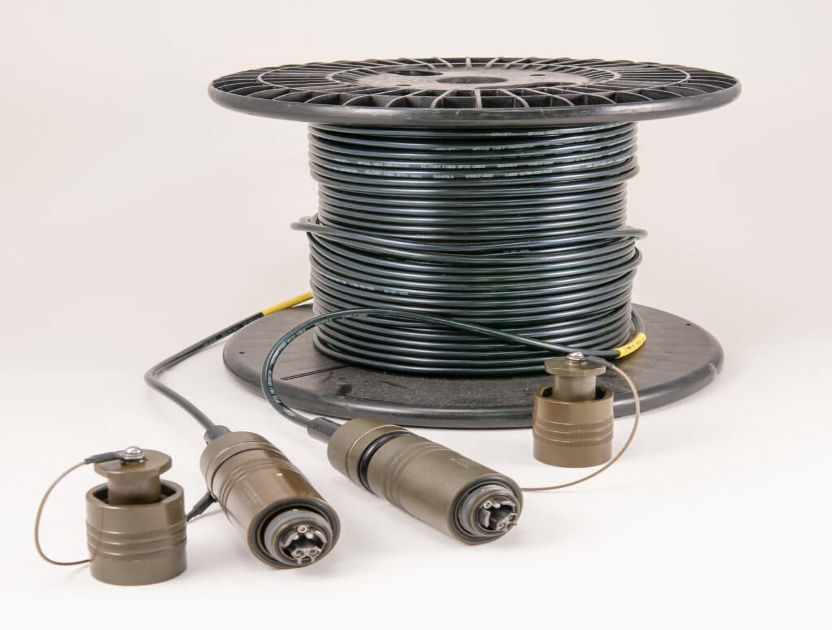
Black tactical fibre cable on a metal spool with olive rugged connectors and protective caps Fibre

Fibre Optic Harnesses and Optical Systems

Multi-branch fibre harnesses built to your drawing and tested leg by leg.

  • BuildTo drawing
  • BranchesMulti-leg breakouts
  • FibreSM or MM
View specs
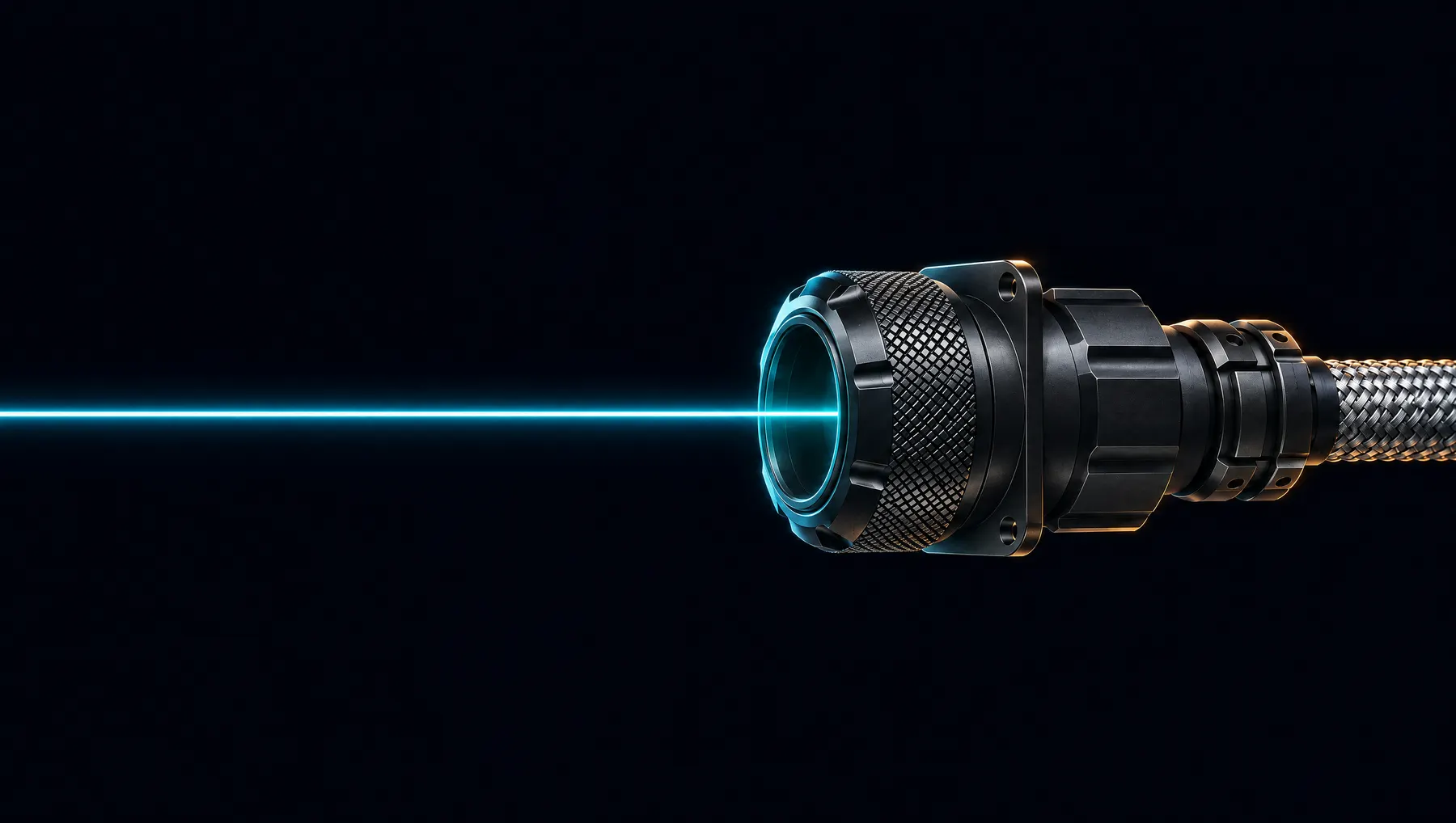
Rendered fibre optic connector assembled with its cable, showing a sealed rugged shell Fibre

MIL Circular Fibre Connector, 4 to 48 Channels

Up to 48 fibres through one rugged circular connector.

  • Channels4 to 48
  • Cable ODUp to 7.5 mm
  • ReceptacleMicro receptacle
View specs
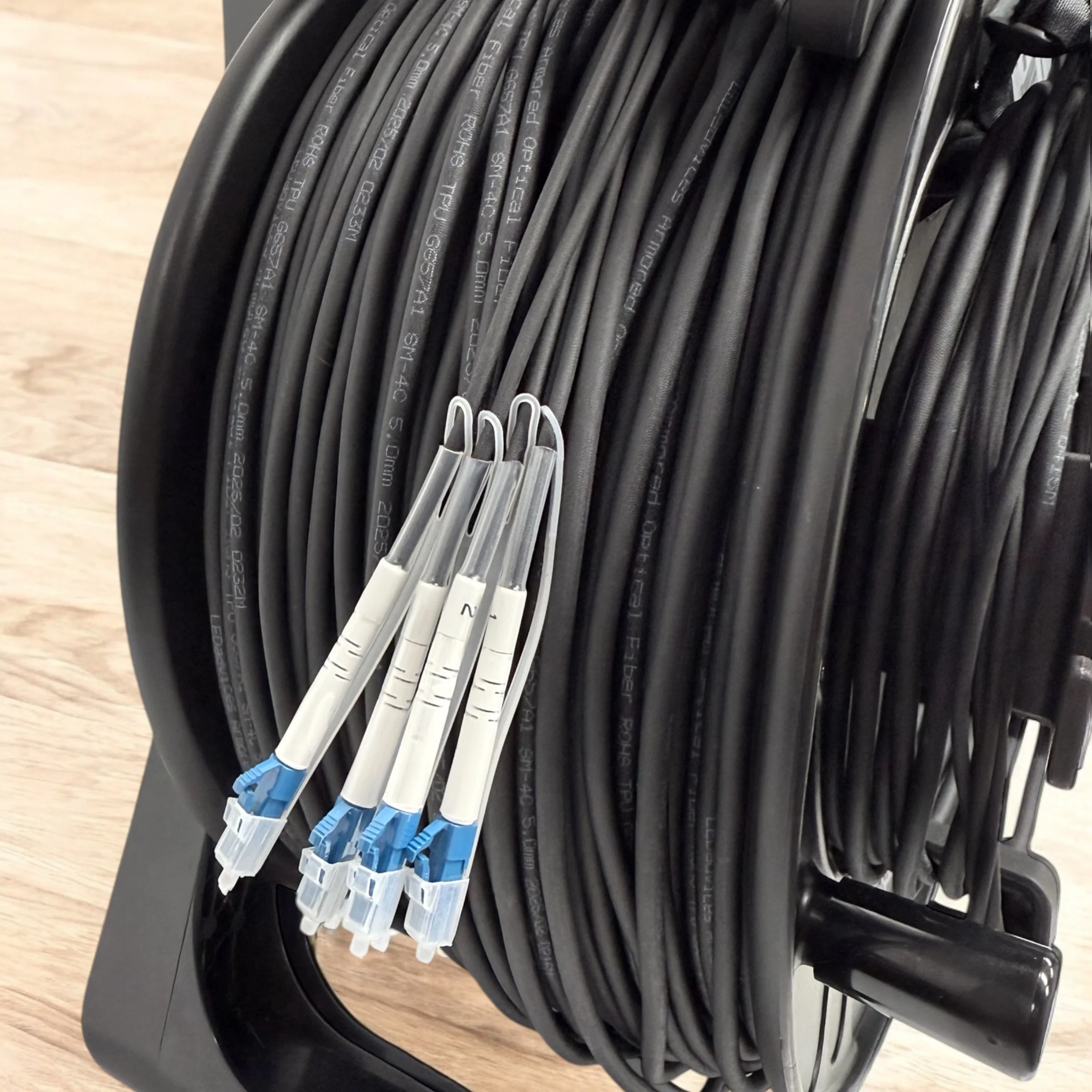
Reel of black armoured TPU single-mode fibre cable with LC connector breakouts hanging from the end Fibre

6-Fibre Armoured Tactical Cable Assembly

Six single-mode fibres under steel armour, in a 5.0 mm jacket.

  • Fibres6, single-mode
  • FibreG.657A bend-insensitive
  • ArmourStainless steel spiral
View specs
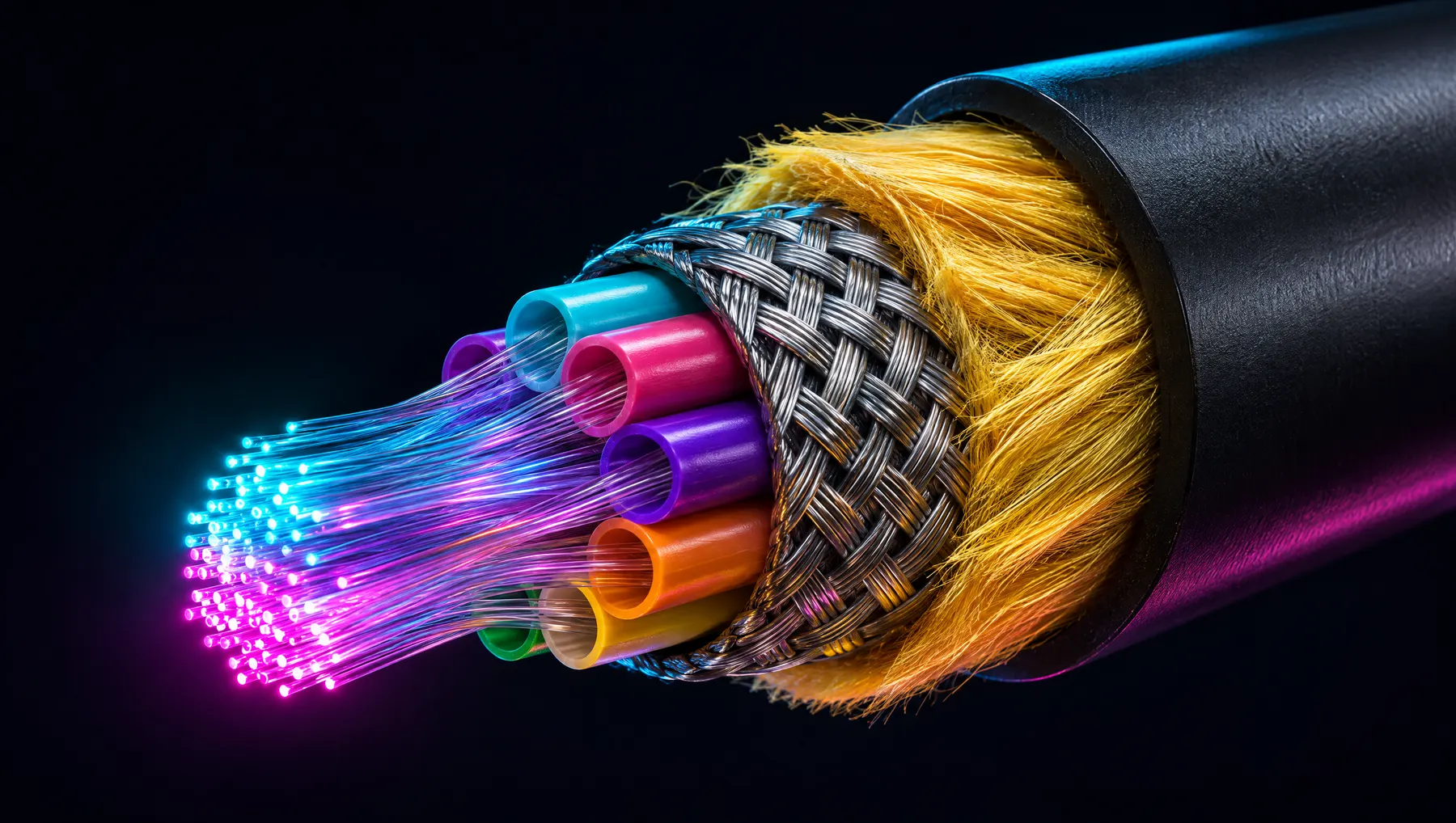
Cutaway illustration of an armoured fibre cable showing fibre, aramid strength layer, steel armour and outer jacket Fibre

Duplex Armoured Tactical Fibre Cable

A transmit and receive pair with steel armour, for links that get stepped on.

  • Fibres2 (duplex)
  • FibreSM or MM
  • ArmourSteel spiral
View specs
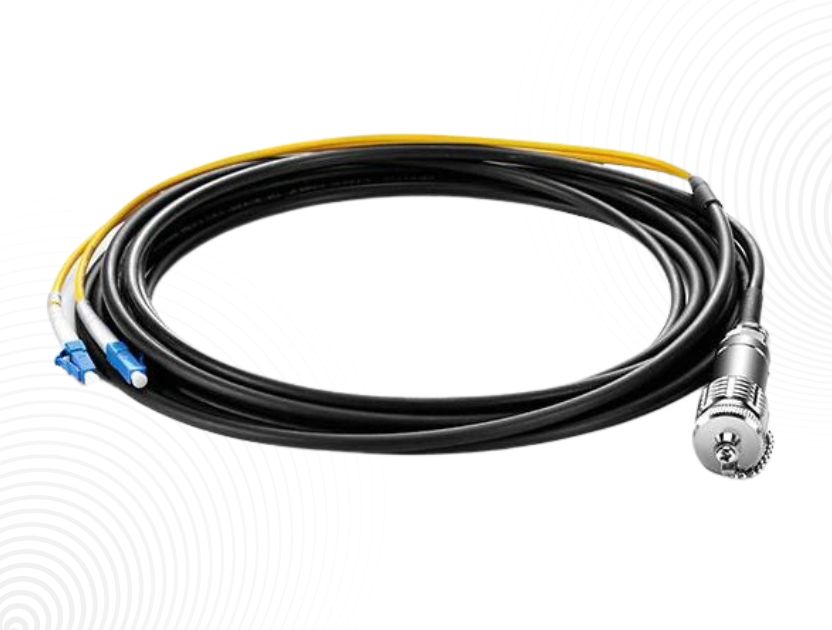
Black outdoor fibre cable assembly with an LC duplex breakout on one end and a round metal rugged plug on the other Fibre

Outdoor Fibre Optic Cable Assemblies

Sealed fibre jumpers for towers, poles, enclosures and field sites.

  • SealingIP67 (mated)
  • Temperature-40 to +85 °C
  • FibreSM or MM
View specs
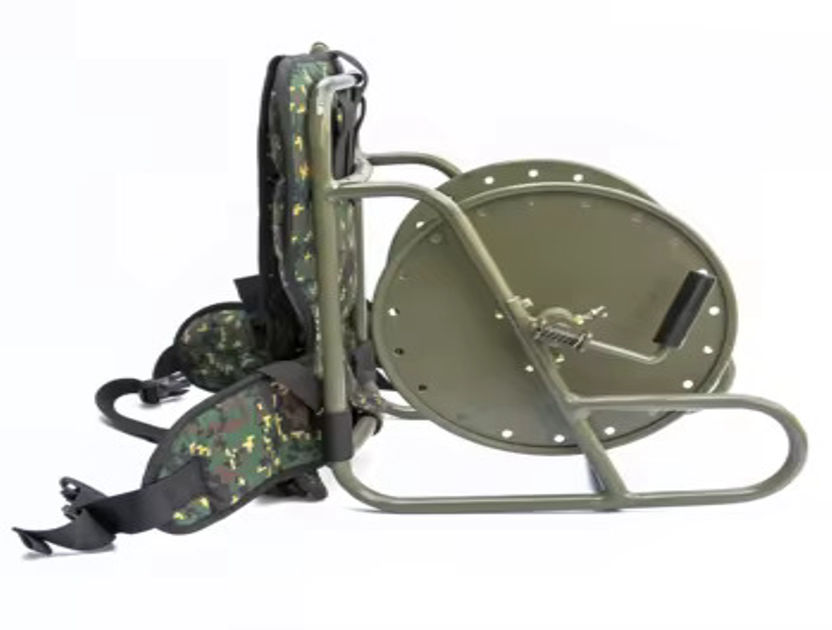
Olive backpack cable drum frame with camouflage carry straps and an empty metal drum Fibre

Harsh-Environment Cable Drums and Backpack Reels

Carry the cable on your back and pay it out by hand.

  • TypeBackpack or frame drum
  • DeploymentManual, hand crank
  • StrapsAdjustable
View specs

Engineering notes for defence and aerospace

The environment

Defence and aerospace links fail in places where nobody can fix them quickly. A tactical cable may be unreeled across a field at night, driven over by a support vehicle, dragged back onto its drum in the rain and redeployed the next week. Inside an airframe or an armoured vehicle the same fibre has to survive constant vibration, wide temperature swings, fuel and hydraulic fluid, and connectors that are mated in cramped bays by people wearing gloves.

The physics does not change because the environment is harsh. A single-mode core is 9 µm across, and every connection still depends on two tiny glass faces lining up to within a fraction of that. Defence assemblies are about protecting that alignment from everything around it.

What fails

Most field failures come down to four things. Contamination at the connector is the first: one grain of sand on a physical-contact end-face can block most of the light and scratch the mating face. Mechanical damage is the second: crushed jackets, kinked fibre where the cable leaves the boot, and broken strength members after repeated reeling. Coupling comes third: connectors that loosen under vibration, or that are cross-mated and damaged because two similar connectors sit side by side. Last is material limits: jackets that crack in cold, soften in heat or swell in fluids, and epoxies taken beyond their rating.

What to specify

Start with how the link will be used, not with a part number. Tell us whether the cable is fixed inside a platform or deployed and recovered in the field, how often it will be mated, and in what conditions.

  • Fibre: single-mode OS2 for longer runs and future headroom, or OM3/OM4 multimode for short links with 850 nm equipment. Fibre count, including spares.
  • Connector: MIL-DTL-38999-style circulars with MIL-PRF-29504 termini for equipment interfaces; hermaphroditic MIL-DTL-83526 (TFOCA-II style) for daisy-chained field cables; expanded beam where dirt and water are certain. Say whether QPL-listed parts are mandatory.
  • Cable: tight-buffered or breakout construction, aramid strength members, polyurethane or armoured jacket, and the bend radius the route allows.
  • Packaging: reel or drum type, length per reel, receptacles for shelters and panels, dust caps with lanyards.
  • Testing: insertion loss per channel at the stated wavelengths, end-face inspection, and the report format you need delivered with the assembly.

Standards that matter

MIL-DTL-38999 defines the circular connector family used across platforms, and MIL-PRF-29504 the fibre termini inside it. MIL-DTL-83526 covers hermaphroditic tactical connectors, and MIL-PRF-64266 expanded-beam circulars. IP67 and IP68 under IEC 60529 describe sealing, but always ask whether a rating applies mated, capped or both. Our standards reference explains each in plain terms, and the tactical cable guide walks through a full specification.

How we work with defence teams

Every assembly is cut, terminated, polished and inspected in our Mumbai workshop, and every leg is tested for insertion loss before it ships. If your drawing calls for a connector mix or cable build that does not exist off the shelf, our custom engineering process starts from the drawing, a sample or a description of the job.

FAQ

Defence and Aerospace: questions buyers ask

Which connector should I use for a field-deployable fibre link?

For cables that are joined and split in the field, use a hermaphroditic tactical connector (MIL-DTL-83526, TFOCA-II style) or an expanded-beam connector. Hermaphroditic connectors let any end mate with any other; expanded beam tolerates dirt best. Both are available on armoured or polyurethane cable wound onto reels.

Can you build to our programme drawing?

Yes. Send the drawing, the connector part numbers and the test requirements. We confirm what we can build as drawn, flag anything we would change, and quote with the test report format agreed up front.

Do you supply MIL-qualified connectors?

Tell us whether your programme requires QPL-listed parts or accepts intermateable equivalents, and we will quote accordingly. We state on every quote exactly which connector is being supplied.

What fibre is best for defence assemblies?

Single-mode OS2 is the usual choice for longer tactical links and anything that may carry higher data rates later. Multimode OM3 or OM4 suits short links inside platforms where the equipment uses 850 nm optics.

Request a quote

Tell us where the signal has to go in defence.

Send a drawing, a part number or a rough description. An engineer replies within one business day with options and a quote.

Built in Mumbai and shipped to the UK and EU by express air freight, with DAP or DDP terms on request.